On selling Steph Bowe

Wednesday, October 5, 2011

I've been thinking a lot lately about the idea of the writer as a salesperson, as a public image, as a product. (And, by extension, about the public personalities everyone has to put on.)

I wonder: where does my real, genuine self stop and the idealised constructed image begin? Am I and is anyone (specifically any writer) ever genuinely themselves in a public sphere? Or is the fact that we are all trying to sell ourselves, our books, trying to make people like us or the approximation of us that we have created that is suitably palatable for others, mean that we must all always be separating our real flawed selves from our public personas? Am I, in writing this blog post, expressing my own opinion or the sort of thing that I think other people will read that will make them think positively of me?

Am I turning myself into a commodity? How often does someone buy my book because they've seen me speak or seen this site and thought 'hey, Steph Bowe is young and honest and awkwardly charming'? And is that what I am really like or is that an invented self? (Obviously I am young compared to most writers, so that's a fact.)

More than anything I want to write brilliant novels that readers will enjoy, but can writing brilliantly save you if you cannt stand to be a public speaker, and hate the internet, and are not an easily sellable identity? Can brilliant writing on its own land a writer a book deal and a career and writerly success, or must the writer also be a salesperson, with a dynamic, if fake, personality? Where is the line between intelligent discourse from writers and regurgitated marketing copy? What do brilliant books count for if only some people think they're brilliant?

What happens when you spend most of your time being your public persona? Does your secret, true, can't-reveal-or-people-won't-like-me self begin to disappear and become your constructed self? Is this a good thing? Do you lose that part of yourself, or does that part of yourself change? What if you like the public version of yourself more than you like who you really are?

Obviously I have a lot of questions. But one's identity is something everyone is thinking about (I imagine) and madly trying to formulate, especially in their youth. And everyone says 'be yourself' a lot, but I don't think anyone even knows who they are because they have taken on so much from other people and the media and their experiences that they really only have an idea of the person they think they should be. And maybe we don't have one self. Maybe 'be yourself' will mean a different thing to you every day of the week.

See, I'm breaking it down too much. Next minute I'll be talking about The Matrix and everything being an illusion (I'd take the red pill, fyi). The title of this blog post is very misleading. I'm sorry.

Anyway, questions I would love to hear your thoughts on (because you can't possibly answer all the questions in this post):


  • Should writers be public personalities to the degree that they are, or should we shut them up in their writing caves before their crazy thoughts infect the world?
  • Can anyone ever really be their genuine selves? Are our constructed facades extensions of these real selves or entirely false?

Writing Bootcamp: Kate Gordon's Editing Secrets!

Tuesday, October 4, 2011

Writing Bootcamp is a blog series in which I invite fabulous authors to share with you (yes, you! assuming you are an inquisitive writer) their best bits of writerly advice. Today, Kate Gordon, the most fabulous Tasmanian author of Three Things About Daisy Blue, Thyla and the upcoming sequel Vulpi, shares her very fabulous editing advice

--

I used to be afraid of editing. I used to think it meant all those lovely words I'd written – so lovingly crafted and so treasured, each and every one of them – would be hacked at; ripped apart; mutilated.

Now, I know better.

This is the metaphor I use when I'm doing school visits: Your first draft is a lump of play dough. It might be the colour you want for your novel. It might even have glittery bits or pretty swirly bits or it might even be your favourite colour ever! It might be a new formulation. It might have taken you ages and ages to get that lump of play dough. But it's still just a lump.

Editing is what turns it into something beautiful.

Editing might mean taking bits of the lump away, or adding bits on. It might means tweaking that part of the lump or making that bit flatter or that bit bumpier. It might even mean squashing the lump down and building it again. It might even – gasp – mean throwing that lump of play dough out because it's so full of dirt and fluff now that it's not even the same pretty colour it was before. There might be a lot of love – and even sweat (yuck) – in that lump but honey, it just aint purdy any more.


It's a long metaphor, I know, but I think it's a good 'un. So many beginning writers get to 50,000 words and go “Hurrah! I finished! That's it!”.


I'm the wicked witch who always says: “Good on you. Now edit.”


There are no hard and fast golden rules for editing, just as there are no golden rules for writing. Every writer is different and so is every editor. The editor is just as much of an artist as the writer. My wonderful editor at Random House said to me that as an editor she needs eyes in the back of her head and the side of her head and all over her head so she can see the scene from every direction. As our own editors (because yes, you must edit your work BEFORE you send it to a publisher), we kind of need the same thing. We need to see our manuscript – or our lump – from every angle. Because what's the point of a play dough sculpture that's pretty on one side but ugly and messed up on every other side?

Having said there are no golden rules, here are MY tips for editing:


  1. Put your manuscript away. Seriously. If you have a deadline this gets harder but if you have a bit of time put the thing away. Read some books. Watch some X Factor. Just don't think about it for as long as possible. Then, when you've almost forgotten what the book was even about, bring it out. Read it. Realise it's a lump. You'll see that it's a lump after a bit of distance. Whenever you've just finished a manuscript it's always the best thing you've ever read. After a few weeks? It's a lump.
  2. Read it first like you're a reader. Start to finish. Don't have your editing hat on yet. Pretend you've never read this thing before. Pretend you just spent twenty dollars on it and you're hoping it's the best book you've ever read. Make a note down the side whenever you go “huh”? Or “that doesn't make sense. Didn't they just ...” or “people so don't talk like that”.
  3. Then, read it as an editor. Read every scene with eyes all over your head (I know, that's a bit of a gross image). See it from every character's point of view. If there was a character who had a line at the start of the scene who then doesn't have a line until the end of the scene … WHAT ON EARTH WAS HE DOING FOR THE REST OF THE SCENE? If a character was on a boat and on the next scene they're up a mountain (sorry to my editor – I do this ALL THE TIME), HOW DID THEY GET TO THE MOUNTAIN?
  4. Read it out aloud. Dialogue especially but all of it, if your voice will take it. Read it to your cat. Do not read it to your sister or your boyfriend. Not yet. This is your time with the manuscript. Let them read it later. You and MS need some alone time to get to know each other.
  5. After you change a whole scene (which you will have to do – sorry), you will need to read the whole MS again. Changing even one sentence in the editing process causes a domino effect throughout the book. My tip? Every bit you cut or significantly change – don't delete it. Put it in a separate document and use a highlighter function in Word to highlight any sentences within that scene which you'll need to pop into another scene in order for your MS to still make sense.
  6. Use the technology. Use the notes function, the highlighter function, “track changes”. The technology is there to serve you. Oh and also? Save a new document every time you go in to edit. That way you can look back and see what changes you made or go back to an earlier version if you really stuffed up. Oh and back up. Please, please back up.
  7. Any word that doesn't need to be there? Cut it. Seriously. I learned this from my great friend, Christina Booth. She's a picture book writer and she had taught me so much about writing novels. She has to tell whole stories in 500 words. She's very, very good at telling lots in as few words as possible. It might be tempting to fill your novel with “fluff” just to get to that magic 50,000 word count (or 100,000 if you're writing fantasy). Just don't do it. Ditto “pretty metaphors”. Don't chuck lots in there. Stick with one and really go for it. And similes should be used very sparingly.
  8. Eat lots of chocolate. This last tip might sound flippant but editing does take it out of you in a way writing kind of doesn't. They're very different skill sets. When you're writing you're on a creative high. When you're editing you need to concentrate. Hard. So eat well (and that includes chocolatey treats for your mental health) … And take breaks. Don't rush this. It's a long process. But a very rewarding one.
Hope all of that helps! I hope you're all out there sitting with your little play dough lumps (after having stashed them under the bed for a while), with your finger outstretched, ready to give it the first, important, poke. Don't be afraid. You're not mutilating. You're making it sing. See what I did there? I mixed my metaphors – Play Dough DOES NOT SING!


You're making it wonderful.

--

Kate Gordon grew up in a very booky house, with two librarian parents, in a small town by the sea on the north-west coast of Tasmania. In 2009, Kate was the recipient of a Varuna writer’s fellowship. Her first book, Three Things About Daisy Blue – a young adult novel about travel, love, self-acceptance and letting go – was published in the Girlfriend series by Allen & Unwin in 2010. Now Kate lives with her husband and her very strange cat, Mephy Danger Gordon. Every morning, while Kate writes, Mephy Danger sits behind her on the couch with his tail curled around her neck. Kate was the recipient of a 2011 Arts Tasmania Assistance to Individuals grant, which means she can now spend more time losing herself in the world of Thylas and Sarcos. She is currently working on the sequel to Thyla. Kate blogs at http://www.kategordon.com.au/blog and you can follow her on Twitter at www.twitter.com/misscackle. She sometimes says some funny stuff!

Did I ever mention that I took a gap year after kindergarten?

Monday, September 26, 2011

If I could actually remember what I did that year, I would write a heart-warming, poignant, laugh-out-loud funny memoir about a five-year-old's search for identity and purpose in the 'burbs. My grand and life-transforming exploits would inspire you to make change in your own life. I'd write about my existential crises, and the myriad interesting characters I encountered, and about backpacking across Europe... wait I don't think it was possible that I backpacked across Europe... about backpacking across the backyard! Oh, the adventures I had! The realisations about the absolute truths of life and love and death and religion! The discovery of self outside the limits of the System! The freedom! Like Eat Pray Love only forty years younger!

And then I went to primary school.

Unfortunately I have a terrible memory and I am left to assume that 1999 was probably the greatest year of my young life. But maybe I just stayed at home and read The Very Hungry Caterpillar over and over again. Probably. (Really quite similar to my life now.)

(I could always ask my family, but you know me. I'd rather wonder and invent a splendid fiction.)

A Thousand Words Festival

Tuesday, September 20, 2011


Hey you kids in/around Melbourne! What're you up to this Friday & Saturday? You're going to be sitting at home? Wasting hours on Facebook and Tumblr and thinking 'I should really get dressed and participate in life because it is short/you only live once/insert cliche saying here'? (Note: This is not. At. All. reflective of Steph Bowe's lifestyle. No way.)

Here's what you should do instead: Come see me and a whole lot of other awesome authors at A Thousand Words Festival at the Northcote Town Hall.

Bec Kavanagh, the super fabulous organiser of the festival, says this about it:
Not long now until the annual celebration of books that is A Thousand Words Festival! In 2011 we’re bigger than ever with the biggest book swap, the festival gala, interactive performance panels and books, so many books!

If you’re on holidays and are a reader, wannabe writer, emerging editor, book fiend or sucker for a story come to the festival this year. On Friday the 23rd and Saturday the 24th of September you’ll be able to come down to the Northcote Town Hall and join other writers and book lovers to talk all things bookish. YA authors Tim Pegler, Leanne Hall, Cath Crowley, Fiona Wood join many
more to present a show like no other. Check out the full program at http://www.athousandwordsfestival.com.au/ and we’ll see you at the festival!

I'll be there on the Friday, on these shiny, happy panels (my face is also on the poster. Say hello to little Steph on the poster. Hello little Steph!):

1.00pm – 1.55pm
Main Hall – Generation why?
Authors answer the age old question “why should I read” with their take on what it takes to write books people want to read.
Steph Bowe & Michael Pryor
Hosted by Bec Kavanagh
Studio -Bookshop

4.30pm – 6.00pm
Studio – PD for teachers
“Bringing books out of the classroom” Using the festival momentum to engage reluctant readers in class.
Bec Kavanagh in conversation with Fiona Wood, Cath Crowley and Steph Bowe

Yes, I am on panels with Michael Pryor and Fiona Wood and Cath Crowley. Yes, they are infinitely more mature and intellectual than I, and yes they are writing superstars. I know. I am really terribly excited. Anyway, it promises to be oodles of fun and there is possibly complimentary juice. But I am not sure. I will get back to you on that. Tickets on the website!

Let's talk about books!

Wednesday, September 14, 2011


Or more accurately, let's talk about books & magazines & other printed things I've recently consumed

Dangerous Angels by Francesca Lia Block
I feel that if I were seventeen closer to when these novels were published - late eighties to mid nineties - when perhaps they were really unique and original and fresh, I would have enjoyed them a lot more. I just sort of don't really understand these novels, or why people adore them with such intensity - what am I missing? How can I understand them? I think they were too brief for me - a strange sort of cross between short story and novel, though novella doesn't seem like the write word - and things resolved too quickly for my liking. There were parts where I thought the writing was really lovely and enchanting, but there were also parts where I was terribly confused. Some stories occur in a world closer to reality than others, it seemed, and I preferred those.

Animal Farm by George Orwell
Is very good.

After Dark by Haruki Murakami
This is the first Murakami novel I have read, and I can't say it really engaged me (I will probably read one of his more popular novels and see whether I have a different reaction). There were lovely moments, and I didn't mind the lack of action, but overall I just felt a sense of something missing. Maybe this is because I am used to a more traditional plot-driven novel, but it didn't even seem particularly character-driven, more based around a particular mood. I got the sense it would work better as a short story.

Love Story by Erich Segal
Look, I know lots of people really adore this novel (and the film, which I haven't seen) and it's short and sweet and everything, but I will say this very quietly so as not to offend you, but I didn't really like it. It was overly simplistic for my liking. But it's only a short novel, and if you are a romantic maybe you will like it.

Eating Animals by Jonathan Safran Foer
I highly recommend this. Not a lot else needs to be said.

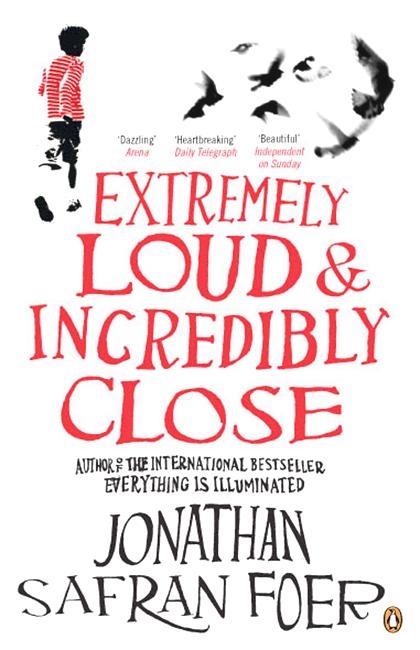
Extremely Loud and Incredibly Close by Jonathan Safran Foer
Right near the end of this novel, probably the end of the second to last chapter, I couldn't breathe properly for about five minutes and cried a bit (also it was in the early hours of the morning and I was quite tired and had just finished another round of revising my novel so perhaps that had something to do with it, too). And I feel this odd sort of guilt over being really affected by novels, as if I should perhaps be more critical. I'm not sure why. But there were sections of this book that I really loved and that were just magnificent and sections I found extremely disquieting and things I didn't really get. Overall, fairly brilliant.

Everything Is Illuminated by Jonathan Safran Foer
I didn't find Everything Is Illuminated quite as affecting, I think because of the stories set in the past felt so distant - rather than it being personally told, it was the great-grandson recounting events. Alexi was a great narrator, though. (And in terms of age-appropriateness, I wouldn't recommend either this or Foer's other novel to anyone younger than sixteen - obviously it depends on the reader, and I'm not generally one to say 'young people should not read this!' but some of the content, especially in Everything is Illuminated is fairly inappropriate for younger teenagers).

Less Than Zero by Bret Easton Ellis
This is another book that I feel I would have found more affecting had I read it when it first came out, when the whole 'rich and apathetic youths living morally disturbed lives' thing wasn't quite as cliché. I probably would have found it more shocking if I were growing up in the eighties or nineties. Twelve by Nick McDonnell actually strikes me as very, very similar to this novel, and I imagine McDonnell would've been fairly inspired by Ellis. (Similar to the last book, I wouldn't recommend this to anyone younger than about sixteen.) I'm going to read more Ellis novels, but this one just made me feel slightly uncomfortable more than anything. (Always when I am reading books that people I know love, I am terribly confused and feel like I am missing something.)

Fear and Loathing in Las Vegas by Hunter S Thompson
Just downright strange. I'm not sure I recommend it to anybody at all. And especially not young people. Maybe older people who lived through the sixties and were/are drug-addled would get it.

The Big Issue No. 388: Fiction Edition Special
Brilliant, brilliant, brilliant. All such good stories, I cannot pick any favourites. I highly recommend you get your hands on a copy.

The Victorian Writer Sept-Oct 2011
There's a short little article by me in this magazine put out by the Victorian Writer's Centre (it's on the right side of page 13, and is called 'Month of Writing') this month! You should read it! There are also lots of other great articles & stories inside.

--

Would love to hear your thoughts on these novels (especially if you loved the ones I didn't like and can somehow explain to me what I'm missing...) (Also I would appreciate book recommendations! I need to read more!)

Teaser Tuesday: Little Death

Tuesday, September 13, 2011

This is not from the novel I am currently editing nor the one I am struggling to write, but a little scene which I wrote quite a while ago. I've had the general idea for this novel and a bunch of scenes in my head for a long time now, and I'd like to go back and write a little more and see where it takes me (I don't really like this scene too much - it's terribly sentimental, and I am far less of a romantic than the things I write seem to indicate - but hey! thought you might like reading it).

If I were ever to write it, this would be a novel about twins, awkward afterlife, and reality not measuring up to expectations (and of course unrequited love, because it's the best kind of love to write about). It's very important that you play this song, and then this one whilst reading. I feel it will improve your experience.

-

On a Friday night, just after eleven, Gracie and Wren and I lay on the floor of Wren’s room, stretched out like starfish and staring upwards at the constellation of glow-in-the-dark stars Wren had stuck to her ceiling. Gracie was in the middle, counting the stars under her breath. Wren was playing us all of her favourite songs - we were listening to a Sufjan Stevens one - and it was one of those nights when lying on the bedroom floor and listening to music in the dark with your twin sister and her best friend felt like the height of human existence.


Wren’s room was wondrous, partly because of the girl that slept there. The carpet was all dark blue and plush, and the walls were painted light blue, though the colour only peeked out where the wall wasn’t covered in postcards and letters from Wren’s many penpals (including two children she sponsored in a third world country, a Japanese school girl, quite a few Europeans who sent her very nice chocolate, and a bunch of others, all of whom she wrote to often). The door of her cupboard was permanently open, and stuffed with pastel dresses and shoeboxes filled with sandals and mementoes and all her notes-to-self that she never read. Her mattress was pushed against one wall of her room, and she had a low coffee table against the wall opposite, cluttered with her laptop, speakers and books and stationary and abandoned homework and coffee cups. A full-length mirror leant against the wall there, too, with photos of Gracie and Wren and their various friends tucked into the frame. I was in the corner of one.


Gracie said, ‘I’m making popcorn’ because even though it was Wren’s house, Gracie behaved as if she owned the place, and often decided to make an impromptu snack without first asking the host. Wren never minded. She got to her feet and wandered out, leaving Wren and I alone. The song drew to a close, and Wren got up and scrolled through the artists on her iPod and selected a new song. When she came back, she lay down closer to me.


She tilted her head towards me and whispered, ‘I love this song.’ It was A New England by Billy Bragg. Head still tilted towards me, she closed her eyes and smiled, and began to mouth the words.


There are certain things I took for granted when I was alive. That I would not die anytime soon, that death was for the old and sick and stupid, that I’d breathe and eat and sleep and go to school and be a little bored by it all. That I’d spend a disproportionate amount of time hanging out with my sister, and someday go to uni, and get drunk and fall down, and maybe someday be loved by someone outside my family. That I’d always unrequitedly love Wren, and she’d always see me as like a brother, and I’d feel hopeless about the entire situation. But it’d be okay, because I still got to spend time with her.


And of course I never got to uni, and I only got fall-down drunk on a couple of occasions (both times with my sister around), and I didn’t go to school at all again after that Friday (had I known, I probably would’ve enjoyed Maths Methods a little more, and given my kind English teacher a hug). At least not in my own body.


I’d spent ten years in love with Wren - with her funny laugh and exaggerated stories and her patience and compassion with everybody and her faith in the good of the world - and I must’ve had some kind of inkling of what was coming. Or Gracie must’ve spiked the Coke we’d had earlier in the evening. But whatever it was, I was made brave by the darkness and the music and the perfect moment.


Wren’s hair was crazy with curls, not straightened like usual, and I loved that. She opened her eyes again, ‘This is the best bit.’ I could hear popcorn popping. I saw two shooting stars last night, the song went. I knew it by heart because she’d played it for us before; I had the same songs on my iPod from when she’d burnt mix CDs for Gracie years earlier. I wished on them but they were only satellites.


‘I really like you, Wren,’ I whispered. And this was the understatement of the millennium, and she was quiet for what felt like a long time but couldn’t have been more than a couple of seconds, as the same verse of the song was playing (Is it wrong to wish on space hardware?). And my heart kind of leapt around and did an Irish jig and a full-length marathon in those couple seconds and then Wren whispered back, ‘I really like you, too, Teddy’ and not in a like-a-brother way. And my heart did not slow down one bit.


I wish, I wish, I wish you’d care. She tilted her head closer and kissed me, very softly, like I’d imagined so many times before. And I wanted to bring my hand up and touch the side of her face, and her hair, and her waist. I wanted to kiss her again, and kiss her collarbone, and kiss the freckle on her shoulder, and the scar on her arm from when she’d fallen from a tree with Gracie as a ten-year-old. I wanted to whisper to her every beautiful thing about her and everything she’d ever meant to me. I was hoping beyond all hope that she cared about me to the same degree that I cared about her, and that every pointless and funny conversation we’d shared had the same weight to her. That she’d thought about the few words we exchanged when she came by to pick up Gracie for something late into the night, like I did.


I didn’t get to do any of these things. I never even got to kiss her again.


And obviously Gracie is not to blame for this, though on Friday night she was. The chorus of the song played, and Gracie’s footsteps came down the hall, and Wren and I immediately snapped apart. Those two minutes were the greatest two minutes of my entire year, of my entire relationship (or lack thereof) with Wren, and they were cut short due to the fact that popcorn is obscenely quick to cook in a microwave.


Gracie is usually a pretty perceptive person - well, she likes to think she’s a pretty perceptive person - but I think she’s more tapped into supernatural things (not that I ever believed this, not till later) than plain old teenage sexual tension. She brought the popcorn in and put the light on and didn’t notice me blushing and asked, ‘Do you guys want to watch a movie?’

Should authors really be on Goodreads?*

Monday, September 12, 2011

I have some conflicting feelings when it comes to Goodreads. First of all, I like being able to catalogue and keep track of everything I've read, though I'm on so many different sites now I forget to update it regularly. And I love discussion about books and being able to communicate with other readers on more neutral ground than someone's blog. So I think Goodreads is fabulous in those respects.

However, I don't think one's attitudes towards a book can really be distilled to a score out of five. I much prefer reading reviews that explore the various things they liked and disliked about the book thus giving the reader of the review a sense of whether a book is for them.

Another thing I'm uncertain about is whether or not writers should be so closely connected to their reviewers and their reviews.

It's nice to talk about how important it is that writers accept feedback and critique and improve their work and interact with their readers. Let's imagine for a moment that all reviews - positive and negative and indifferent - all critique the author's work without ever being nasty or personal or vague. This is not true, obviously, but even in this ideal reality of conscientious readers and writers all responding to one another, there would come a point at which the writer would need to stop reading and believing every review of their work and just write already.

Every reader will have a different opinion of a work. By the time something is published, a novel has already been read and ripped apart and pieced back together by multiple people - other writers, editors, and so on. Someone saying 'this book is crap, it would have been better had the girl not died in the end' after a book has been worked on for years and then published is not helpful to the writer.

Reviewers - those writing for print publications, book bloggers, people on Amazon and Goodreads - are brilliant. They help other readers figure out which books are for them and promote novels they love and talking about books and reading and writing is just about as fun a past time as actually reading and writing. But if authors are in close contact with their reviewers, it makes it a hell of a lot harder for them to remain objective. Now that I know lots of authors I find reviewing books by people I know downright impossible - what if I like the author but not their book? What if I dislike the author but adore their book? You end up bringing a lot more baggage to the review.

Writers cannot please every reader. I really want to become the best writer I can be, and enjoy writing, and share stories with other people for as long as possible. But if I read all my reviews and take everything to heart, I will never be able to write. Advice for writers sometimes suggests you write to one person only, and I think that's a lot easier before you're published and you have the opinions of everyone who has a copy of your book and an internet connection. If you believe the nice things people say about you, you have to believe the negative things too.

I'm not saying stop reading your reviews, or stop being friends with authors (guys! Be my friend! Sitting at home and writing is lonely!), or stop accepting critique (everyone has a different opinion, and other people's points of view, those of non-writers or publishing folks, can be immensely helpful). I'm just saying everything in moderation. Don't feel as if you need to read every review of your novel and take all that critique on board, because it won't result in you writing the perfect novel. Maybe, when you're writing a first draft, step back a bit. Because you can't please everybody. And an average score of 2.73 or 3.61 or 4.17 on Goodreads or Amazon or wherever ultimately means very little.

*And by 'authors' I of course mean 'Steph Bowe', but it seemed kind of odd referring to myself in the third person in a blog title. In the body of a blog post, however, anything goes!

Would love to hear your thoughts on the relationship between writers and their reviews - should writers read all of their reviews? Or ignore them entirely? Should reviewers be besties with the writers they review? So many questions! Give me some answers!
Proudly designed by Mlekoshi playground